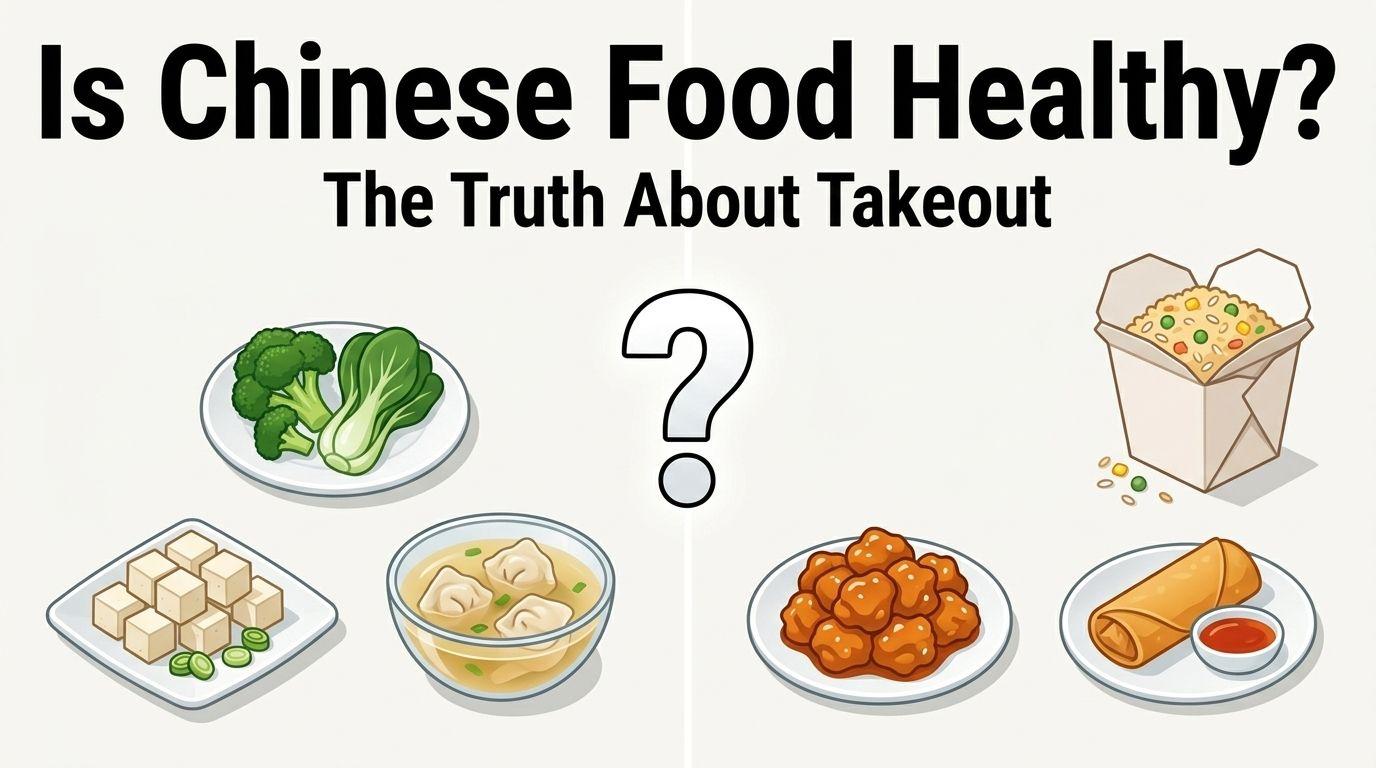
Is Chinese Food Healthy? (Short Answer)
Yes — Chinese food can absolutely be healthy, but it depends entirely on what you order and how it's prepared. Traditional Chinese cuisine, built around steamed vegetables, lean proteins, and broths, is one of the most nutritious cooking traditions in the world. The problem? Most Western Chinese takeout menus lean heavily on deep-fried dishes, sodium-rich sauces, and refined white rice — which can add up fast.
The good news is that with the right knowledge, you can walk into any Chinese restaurant or open any takeout app and make genuinely healthy choices. This guide breaks down exactly what nutritionists say about Chinese food, which dishes are healthiest, and what to avoid.
What Makes Traditional Chinese Food Healthy?
Authentic Chinese cooking dates back thousands of years and is based on principles that modern nutrition fully backs. Here is what works in its favor:
- Abundance of vegetables — dishes like bok choy, broccoli, snow peas, and mushrooms are loaded with vitamins, minerals, and fiber
- Lean proteins — chicken, tofu, shrimp, and fish dominate traditional Chinese menus
- Steaming and stir-frying — these cooking methods preserve nutrients far better than deep frying
- Balanced portions — traditional Chinese meals emphasize balance across food groups, not oversized portions of one item
- Ginger and garlic — two ingredients used constantly in Chinese cooking that have proven anti-inflammatory and immune-boosting properties
- Fermented foods — like black bean paste and vinegar, which support gut health
The issue arises when Chinese food is adapted for Western fast-food demand — heavier sauces, larger portions, and more frying are common changes.
The Healthiest Chinese Food Dishes You Can Order
If you want to eat healthy at a Chinese restaurant, the following dishes are your best options according to nutrition experts:
Best choices:
- Steamed vegetables with sauce on the side — lowest calorie option, high in fiber and micronutrients
- Chicken and broccoli (steamed or lightly stir-fried) — high protein, low fat, a genuine nutrition win
- Moo shu vegetables — loaded with cabbage and mushrooms, light on calories
- Hot and sour soup or egg drop soup — low calorie starters that are filling
- Steamed dumplings (not fried) — significantly lower in fat than their pan-fried versions
- Buddha's Delight — a vegetable-forward dish with tofu, mushrooms, and broth
- Chop suey — stir-fried vegetables and protein with minimal sauce, one of the lighter Chinese-American dishes
Decent options in moderation:
- Lo mein with vegetables — higher in carbs but not unhealthy if portioned correctly
- Kung pao chicken — protein-rich with peanuts for healthy fats, just watch the sodium
- Egg fried rice — better than it sounds, especially when made with lots of vegetables
Chinese Food Calories: What You Need to Know
Chinese food calories vary wildly depending on the dish. Here is a quick breakdown:
| Dish | Approx. Calories (1 serving) |
|---|---|
| Steamed chicken and broccoli | ~280 kcal |
| Egg drop soup (1 cup) | ~65 kcal |
| Steamed dumplings (6 pieces) | ~310 kcal |
| Chicken lo mein | ~490 kcal |
| General Tso's chicken | ~720 kcal |
| Beef fried rice | ~570 kcal |
| Spring rolls (fried, 2 pieces) | ~380 kcal |
| Sweet and sour pork | ~650 kcal |
The pattern is clear: steamed and broth-based dishes stay under 400 calories per serving, while deep-fried, sauce-heavy dishes easily climb above 600–700 calories — sometimes more with restaurant-sized portions.
Is Chinese Takeout Healthy?
Chinese takeout is a different story from restaurant or homemade Chinese food. Here is why:
- Sodium is the biggest problem. A single takeout meal can contain 1,500–3,000mg of sodium — that is the entire recommended daily limit in one sitting. Sauces like oyster sauce, soy sauce, and hoisin sauce are the primary culprits.
- Oil content is higher. Takeout kitchens often use significantly more oil than a home cook would, adding calories without adding nutrition.
- Portion sizes are oversized. What arrives in a takeout container is often 2–3 servings, not one.
Tips to make Chinese takeout healthier:
- Ask for sauce on the side
- Choose steamed over fried whenever possible
- Swap white rice for brown rice or extra vegetables
- Split one order between two people
- Avoid deep-fried appetizers like egg rolls and crab rangoons as a starter and a main dish
What Makes Chinese Food Unhealthy? (What to Avoid)
Not all Chinese dishes are created equal. These are the ones nutritionists consistently flag:
- General Tso's Chicken — battered, deep-fried, and coated in a sugary sauce. One serving can pack 1,400mg of sodium and 700+ calories
- Beef with broccoli (restaurant-style) — the broccoli is healthy, but the sauce is often loaded with sodium and cornstarch
- Shrimp fried rice — frequently cited as one of the unhealthiest Chinese dishes in America due to high sodium, fat, and calorie count per serving
- Crab rangoon and egg rolls — deep-fried starters that add 300–400 calories before the main course arrives
- Sweet and sour pork/chicken — the battered frying plus the sugary sauce is a double hit
The honest answer: the cooking method matters more than the ingredient. Broccoli stir-fried in heavy oil and oyster sauce stops being a health food.
Is Chinese Food Healthy for Weight Loss?
Chinese food can absolutely support weight loss when ordered strategically. Here is how:
- High-protein dishes (chicken, tofu, shrimp) keep you full longer and support muscle retention during a calorie deficit
- Vegetable-forward dishes provide volume and nutrients for very few calories
- Broth-based soups are one of the most effective appetite-management tools — starting with a bowl of hot and sour soup significantly reduces total calorie intake in the meal that follows
For weight loss, build your order around this formula: lean protein + steamed or lightly stir-fried vegetables + a small portion of rice or noodles (not fried).
Avoid making takeout fried rice the centerpiece of your meal. A large serving of shrimp fried rice alone can hit 800–1,000 calories with minimal satiety benefits.
Low-Sodium Chinese Food: What to Look For
Sodium is the most legitimate nutritional concern with Chinese food — particularly for people with high blood pressure or heart conditions. Here are the smartest low-sodium strategies:
- Ask for low-sodium soy sauce — many restaurants have it, but you need to ask
- Choose steamed dishes — these use no added sauce unless you request it
- Avoid MSG-heavy dishes — while MSG itself is not harmful, it signals heavy seasoning
- Order soups carefully — even seemingly light soups can contain 800–1,000mg of sodium per bowl
- Go for vinegar-based sauces over soy or oyster-based ones
- At home, use coconut aminos instead of soy sauce — it contains about 65% less sodium
Healthiest Chinese Chicken Dishes Ranked
Chicken is the protein of choice for health-conscious Chinese food eaters. Here is how the most popular options stack up:
- Chicken and broccoli (steamed) — best overall, high protein, low fat
- Moo goo gai pan — mushrooms and chicken in a light sauce, one of the cleanest dishes on any menu
- Kung pao chicken — moderate, healthy fats from peanuts, good protein, moderate sodium
- Chicken chop suey — stir-fried with plenty of vegetables, a reliable lighter choice
- General Tso's chicken — avoid or treat as an occasional indulgence, not a health choice
Is Chinese Food Healthy for Diabetics?
Chinese food presents specific challenges for people managing blood sugar:
- White rice spikes blood sugar rapidly — request brown rice or reduce the portion significantly
- Sweet sauces (sweet and sour, honey garlic, hoisin) contain significant added sugar
- High-sodium dishes can impact blood pressure, a key concern for diabetics
Best diabetes-friendly Chinese options:
- Steamed chicken and vegetables
- Egg drop soup
- Tofu and vegetable stir-fry with light sauce
- Beef and broccoli with sauce on the side
- Any dish that is steamed and protein-forward
FAQ: Is Chinese Food Healthy?
Is Chinese food healthier than American fast food?
Yes, generally speaking. Traditional Chinese cooking relies on vegetables, lean proteins, and steaming — methods that produce far fewer calories and less saturated fat than American fast food. However, heavily Americanized Chinese takeout (fried dishes, sugary sauces, large portions) can rival American fast food in calorie and sodium content.
What is the healthiest Chinese food takeout order?
Egg drop soup + steamed chicken and broccoli + a small portion of white rice. This combination delivers high protein, fiber, and key micronutrients while keeping calories around 400–500.
Is Chinese food healthy for your heart?
It can be. Dishes built around fish, tofu, vegetables, and green tea align well with heart-healthy eating patterns. The main risk is sodium — excessive sodium intake is a primary risk factor for hypertension.
What do Chinese people actually eat to stay healthy?
Traditional Chinese diets feature far more vegetables, less meat, frequent steaming and boiling, lighter seasoning, and tea rather than sugary drinks. The deep-fried, sauce-heavy dishes are largely a Western adaptation.
Is chow mein or chop suey healthier?
Chop suey is generally the healthier choice. It contains more vegetables and a lighter sauce than chow mein, which is noodle-heavy and often prepared with more oil.
The Bottom Line
Chinese food is one of the most nutritious cuisines in the world in its traditional form. The key is knowing the difference between dishes rooted in that tradition — steamed proteins, fresh vegetables, light broths — and the deep-fried, sodium-heavy items that dominate Westernized takeout menus.
Your healthiest move: build every Chinese meal around a lean protein, prioritize vegetables, go steamed over fried, and ask for sauces on the side. Do that consistently and Chinese food becomes one of the easiest cuisines to eat healthily.