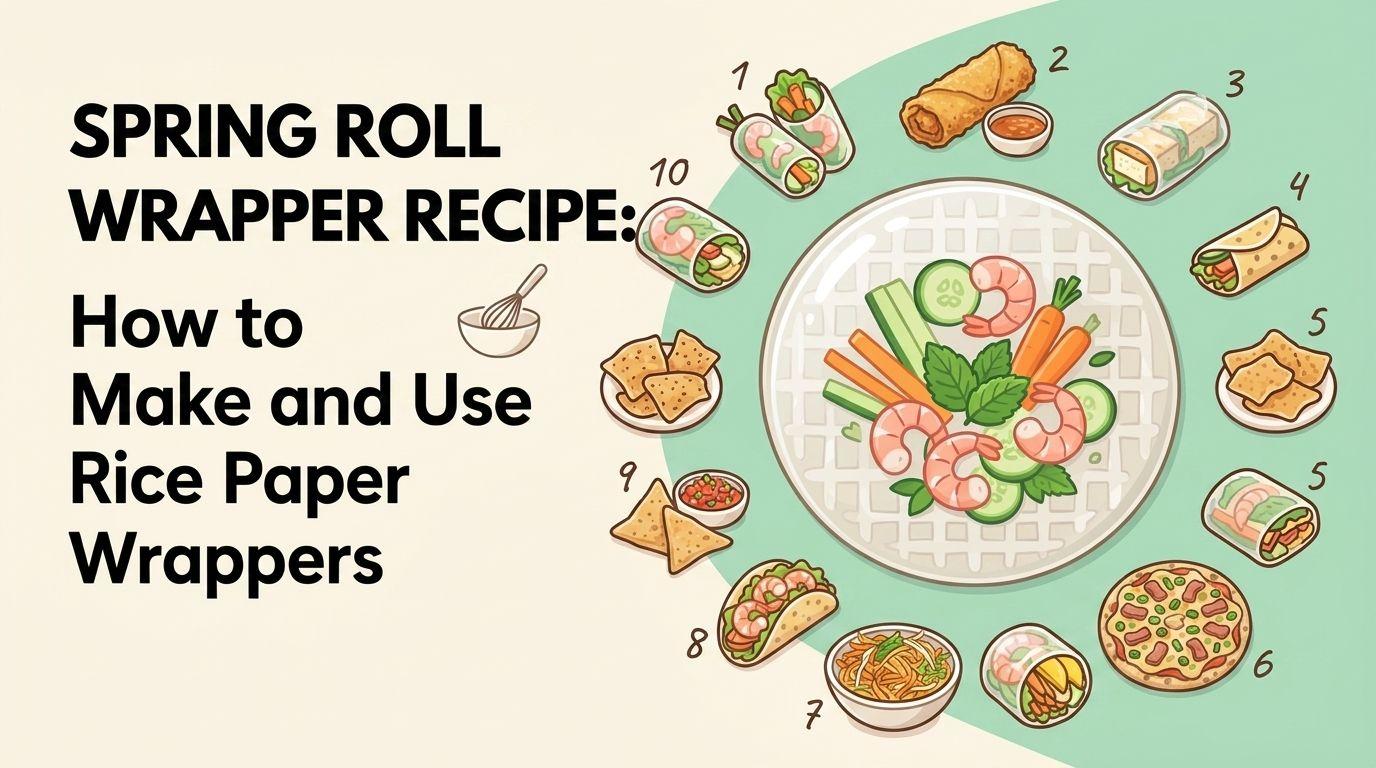
Spring roll wrapper recipe is one of the easiest and most useful kitchen skills to learn. With just a few simple ingredients and the right technique, you can make fresh spring rolls, fried rolls, and other rice paper wraps at home.
Introduction
If you’ve ever searched for a spring roll wrapper recipe, you probably want a simple way to make rice paper work without tearing, sticking, or turning soggy. The good news is that rice paper is easy to use once you understand how to soften it properly and fill it the right way. This guide walks you through the process step by step, with tips for fresh rolls, fried rolls, and popular filling ideas.
What Is a Spring Roll Wrapper
A spring roll wrapper is a thin sheet used to wrap fillings before serving or cooking. In many Asian recipes, rice paper wrappers are used for fresh spring rolls because they are light, flexible, and naturally gluten-free. They can also be fried for a crisp texture or baked for a lighter version.
Rice paper wrappers are different from wheat-based wrappers. They become soft after a quick dip in water, which makes them easy to roll once you know the right timing. That is why many people search for rice wrap recipes and how to prepare rice paper before making spring rolls.
Ingredients You Need
For a basic spring roll wrapper recipe, you only need a few ingredients and tools.
- Rice paper wrappers.
- Warm water.
- A clean plate or cutting board.
- A damp towel or flat surface for rolling.
- Your choice of fillings.
If you want to make fresh spring rolls, prepare vegetables, herbs, noodles, tofu, shrimp, chicken, or lettuce. For fried rolls, use fillings that are not too wet so the wrappers stay intact during cooking.
How to Soften Rice Paper
The most important part of any spring roll wrapper recipe is softening the rice paper correctly. If you soak it too long, it becomes sticky and fragile. If you soak it too briefly, it will crack when you roll it.
Follow these steps:
- Fill a shallow dish with warm water.
- Dip one rice paper sheet into the water for 1 to 3 seconds.
- Remove it immediately and place it on a clean, flat surface.
- Wait about 10 to 15 seconds for it to soften fully.
- Add your filling once the wrapper becomes flexible but not too slippery.
The wrapper will continue softening after you remove it from the water, so do not wait until it feels completely soft before filling it.
Step-by-Step Spring Roll Recipe
This simple method works well for fresh rice paper rolls.
- Prepare all fillings before you start.
- Dip the rice paper in warm water briefly.
- Place it on a clean board.
- Add lettuce first, then noodles, vegetables, protein, and herbs.
- Fold the bottom edge over the filling.
- Fold in the sides.
- Roll tightly from bottom to top.
- Repeat with the remaining wrappers.
A good spring roll wrapper recipe depends on balance. Use enough filling to make the roll satisfying, but not so much that it tears the wrapper. A tight roll holds together better and looks more professional.
Best Fillings to Use
The best filling depends on whether you want fresh rolls or fried rolls. Fresh rolls work well with crisp vegetables and light proteins. Fried rolls work better with firmer fillings that do not release too much moisture.
Popular filling ideas include:
- Lettuce.
- Carrots.
- Cucumber.
- Mint.
- Cilantro.
- Bean sprouts.
- Vermicelli noodles.
- Shrimp.
- Chicken.
- Tofu.
- Avocado.
If you want vegetarian rice paper rolls, use tofu, mushrooms, cabbage, carrots, and herbs. This is one of the easiest ways to create a healthy and colorful dish.
Fresh vs Fried Rolls
Many people use rice paper for fresh rolls, but it can also work for frying. Fresh rolls are light, cool, and usually served with dipping sauce. Fried rolls are crisp and golden, with a richer texture.
Fresh rolls are better if you want a lighter meal or appetizer. Fried rolls are better if you want a more classic crispy version. If you are following recipes for rice wraps, choose the method that fits your filling and serving style.
Tips for Better Results
Here are a few practical tips to improve your spring roll wrapper recipe every time.
- Work one wrapper at a time.
- Do not over-soak the rice paper.
- Keep fillings dry whenever possible.
- Use a damp surface to prevent sticking.
- Roll tightly but gently.
- Serve fresh rolls soon after making them.
If you are making several rolls, cover finished rolls with a slightly damp towel so they do not dry out. This helps keep the wrappers soft and neat.
Common Mistakes to Avoid
Even a simple spring roll wrapper recipe can go wrong if the wrapper is handled poorly. The most common mistakes are over-soaking, overfilling, and using wet ingredients that make the wrapper break apart.
Another mistake is rolling too slowly. Once the rice paper is soft, it can become sticky quickly, so have your ingredients ready before you begin. If you are making rice paper rolls for the first time, practice with a small amount of filling first.
Serving Ideas
Fresh spring rolls pair well with peanut sauce, hoisin sauce, soy sauce, or a light chili dip. Fried rolls are often served with sweet and sour sauce or a savory dipping sauce. You can also serve them as part of a larger meal with soup, noodles, or stir-fried vegetables.
For a simple lunch, make a few rice paper rolls with vegetables and protein, then serve them with fruit or a salad. For dinner, you can turn the rolls into a complete meal by adding noodles and a richer dipping sauce.
Storage Tips
Fresh spring rolls are best eaten soon after making them. If you need to store them, place them in a single layer and cover them with a damp paper towel or plastic wrap to prevent drying. Refrigerate them for a short time, but avoid storing them too long because rice paper can harden.
If you are storing uncooked wrappers, keep them in a dry, sealed package away from moisture. That way they stay flexible and ready for the next time you make rice wrap recipes.
Frequently Asked Questions
How do you keep rice paper from tearing?
Do not soak it too long, and make sure your filling is not too heavy or wet. A brief dip in warm water is usually enough.
Can you fry spring roll wrappers?
Yes, rice paper can be fried for a crisp texture. Use dry fillings and hot oil for the best results.
Are rice paper rolls healthy?
They can be a lighter option because they often include vegetables, lean protein, and less oil than fried foods. The final nutrition depends on the filling and sauce.
What is the best filling for beginners?
Lettuce, carrots, cucumber, noodles, and shrimp or tofu are easy options. They are simple to roll and less likely to burst the wrapper.
Conclusion
This spring roll wrapper recipe gives you a simple way to make fresh or fried rice paper rolls at home. Once you learn how to soften the wrappers, prepare the fillings, and roll them tightly, the process becomes easy and repeatable. With a little practice, you can turn rice paper into a flexible base for quick meals, appetizers, and healthy snacks.